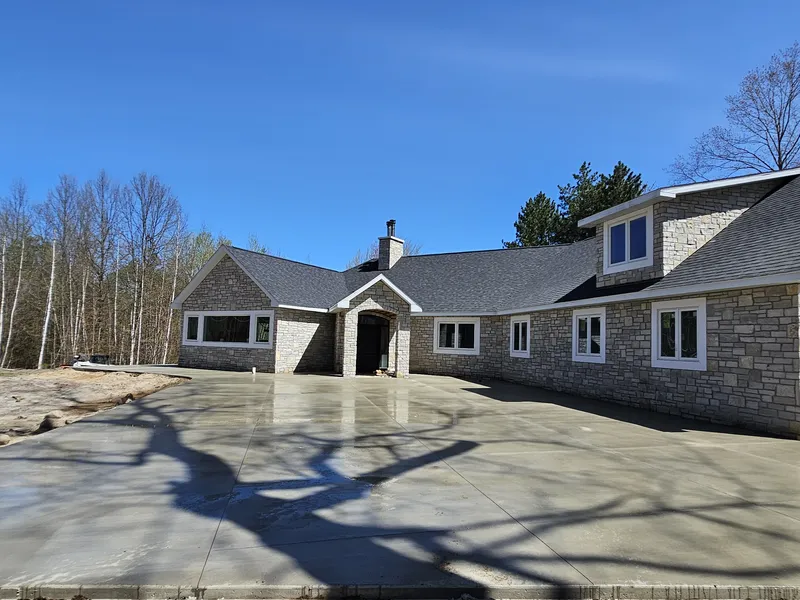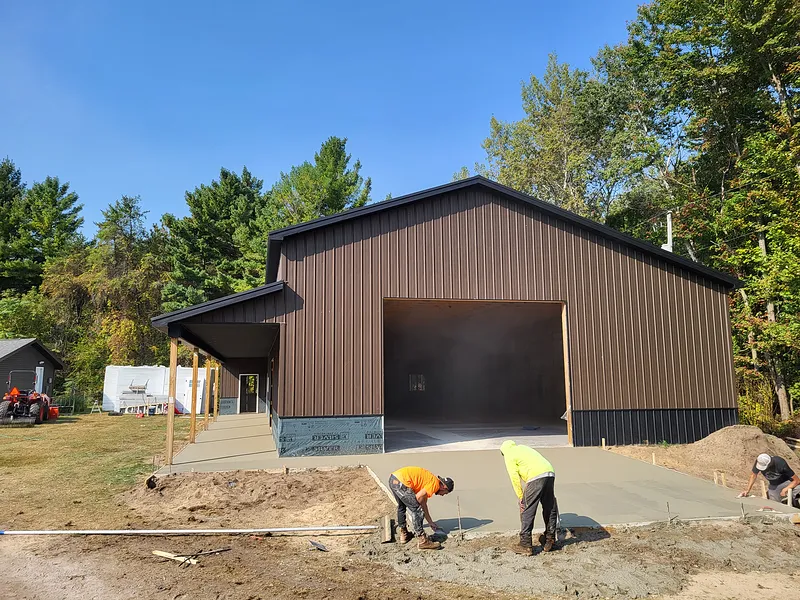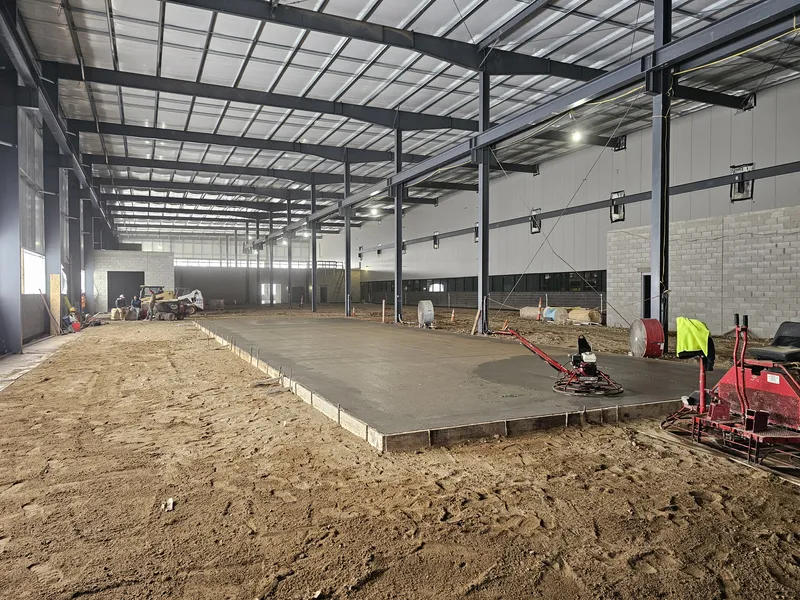
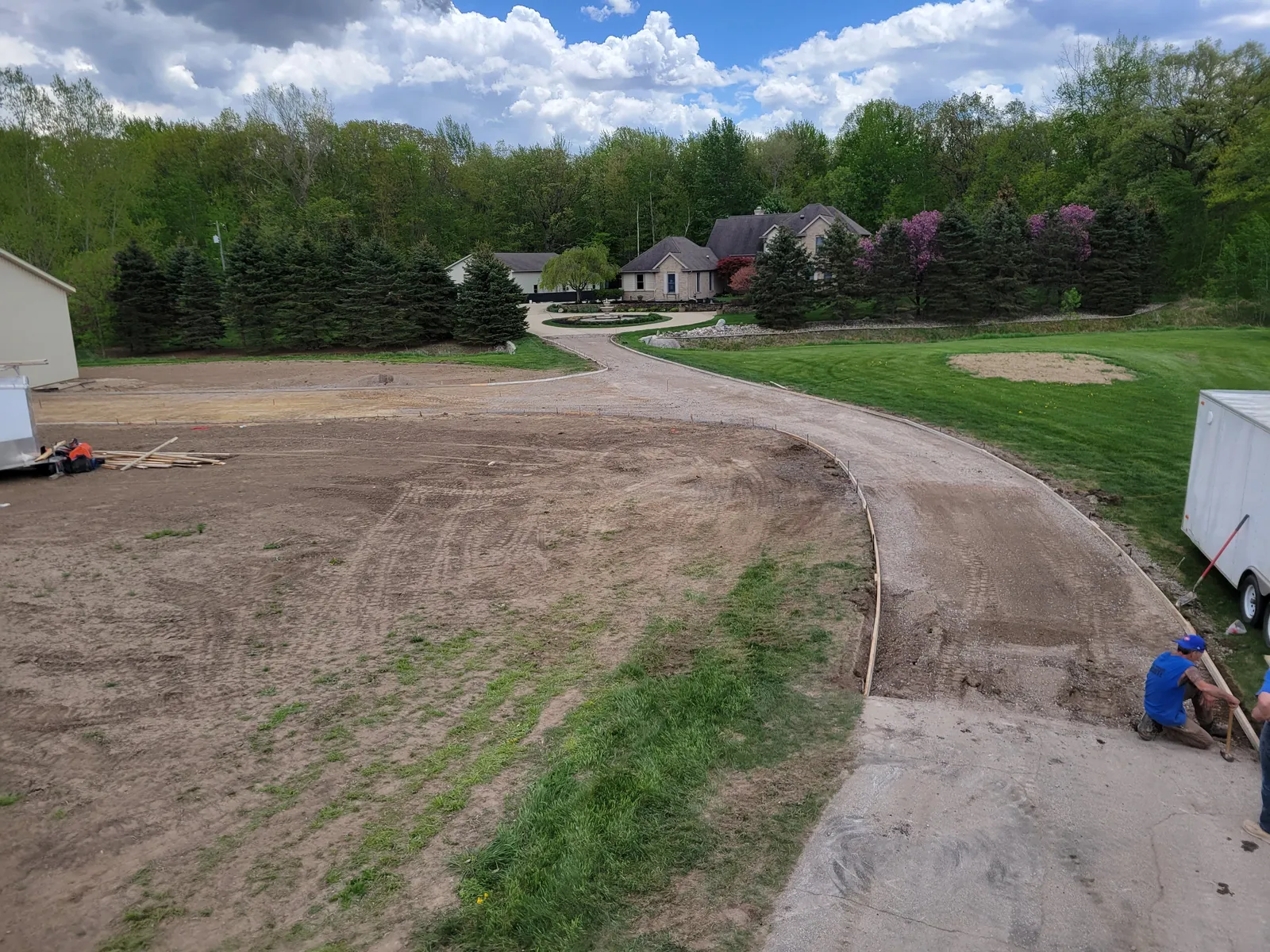
The most important part of a concrete slab is the part you never see. A strong, well-drained base is what keeps concrete from cracking, settling, and heaving — and in Michigan's freeze-thaw climate, it is the difference between a slab that lasts decades and one that fails in a few winters. Here is how proper base prep works.
Why the base matters more than the concrete
Concrete is strong, but it only performs when it sits on uniform, stable support. If the ground beneath flexes, washes out, or lifts with frost, even a thick, well-mixed slab will crack and shift. Good base prep does four things: it spreads loads, drains water away, resists frost heave, and gives you a level surface to pour on. Skip it and you are building on a problem.
Step 1: The subgrade
The subgrade is the native soil your slab will ultimately rest over. Preparing it well sets up everything above:
- Strip organics. Remove topsoil, sod, roots, and any soft, spongy material. Organic soil decomposes and compresses, leaving voids under the slab.
- Excavate to depth. Dig deep enough to fit your gravel base plus the slab thickness so the finished surface ends up where you want it.
- Compact the subgrade. Compact the exposed soil so it will not settle later.
- Watch the clay. Much of the Saginaw Valley sits on clay-heavy soil that holds water and moves with frost. Clay makes a quality gravel base and good drainage even more important.
Step 2: The gravel base
On top of the prepared subgrade goes a compacted granular base — typically crushed gravel or crushed stone with fines that lock together when compacted.
| Slab type | Typical gravel base depth |
|---|---|
| Patio / sidewalk | 4 inches |
| Standard driveway | 4–6 inches |
| Heavy-use driveway / garage | 6–8 inches |
| Poor or clay soils | Go to the deeper end |
Compaction is everything. Place the gravel in lifts (layers of a few inches), compacting each lift with a plate compactor or roller before adding the next. Compacting in thin lifts achieves far better density than dumping it all and compacting once. A properly compacted base is firm enough to walk across without leaving deep footprints and provides the uniform support the slab needs.
Step 3: Grading for drainage
Water is concrete's enemy in Michigan, so the base must move water away from the slab.
- Slope the surface. Grade the base with a slight, consistent slope — commonly about 1/8 to 1/4 inch of fall per foot — directed away from buildings and toward where water should drain.
- Avoid low spots. Standing water under or beside a slab saturates the base, then freezes and heaves it. Smooth, even grading prevents puddles.
- Direct runoff. Make sure surface water from downspouts and the surrounding yard is led away from the slab, not toward it.
Proper grading does double duty: it keeps water off the surface and protects the base below from the saturation that drives frost heave.
Step 4: Vapor barriers (where needed)
A vapor barrier is a heavy polyethylene sheet placed between the gravel base and the concrete to block ground moisture from migrating up through the slab.
- Use one under interior slabs like basement floors, garage floors, and shop floors, or anywhere the slab will be enclosed or finished. It protects flooring, prevents a damp surface, and reduces interior humidity issues.
- Often skipped on open exterior flatwork like driveways and patios, where the priority is draining water away rather than sealing moisture out.
When a barrier is used, sheets should overlap and be kept intact so moisture cannot find a path through.
How base prep prevents cracking and settling
Each step targets a specific failure mode:
- Stripping organics and compacting the subgrade prevents settling as soft material would otherwise compress under the slab.
- A compacted gravel base spreads loads and stops the slab from bridging soft spots, preventing load cracks.
- Grading for drainage keeps water from collecting, freezing, and lifting the slab, preventing frost heave cracks.
- A vapor barrier keeps interior slabs dry and stable.
Get the base right and the concrete simply does its job. Get it wrong and no amount of quality concrete on top can save it.
A quick base-prep checklist
- Topsoil, sod, and organics removed
- Subgrade excavated to proper depth and compacted
- 4–8 inches of gravel, placed and compacted in lifts
- Surface graded to slope water away from structures
- Vapor barrier in place for interior slabs
- Forms set and reinforcement ready before the pour
Let the local experts handle your base
Base prep is unglamorous, but it is where a slab is won or lost — especially over Mid-Michigan's clay soils and freeze-thaw winters. Merchant American Concrete handles excavation, base, grading, and pouring as one system throughout Bay, Midland, Saginaw, and Tuscola counties. Call (989) 501-4525 for a free estimate and we will build your slab on a base designed to last.