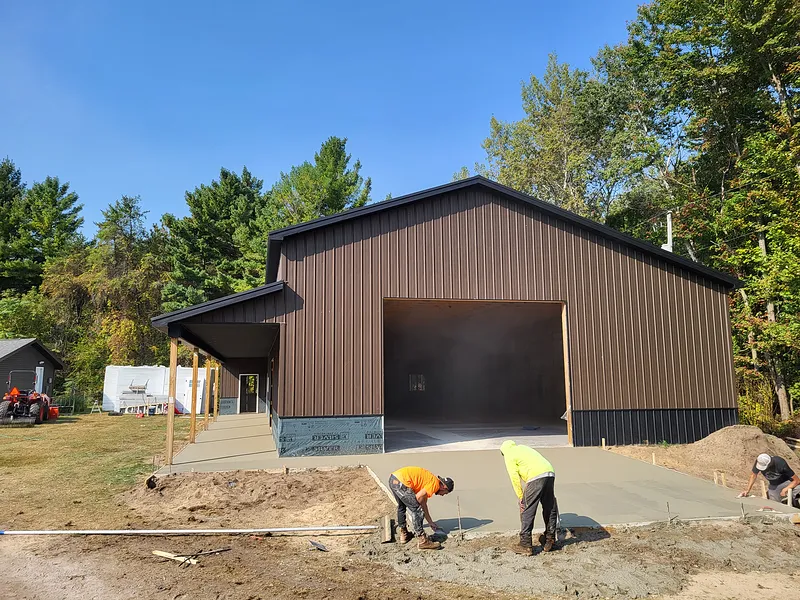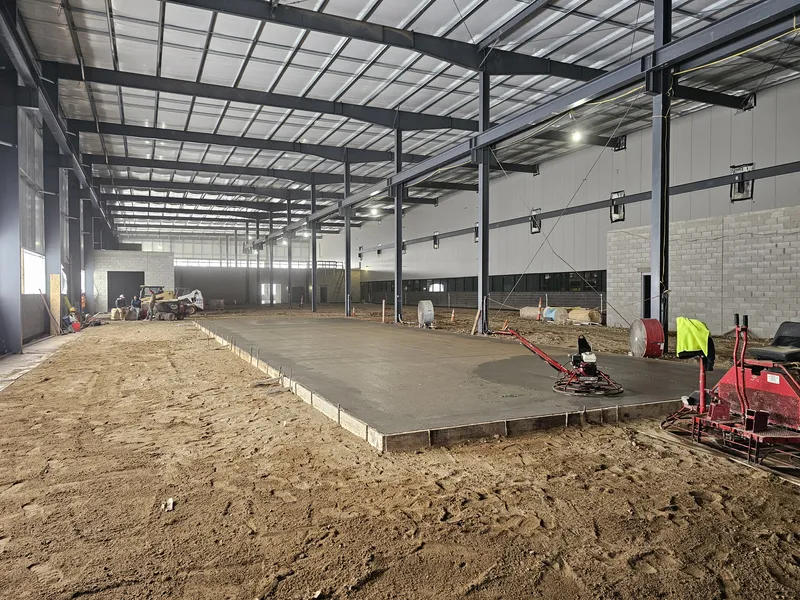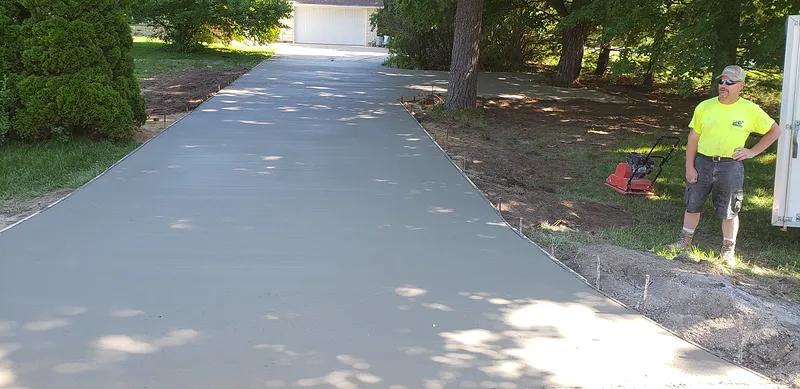
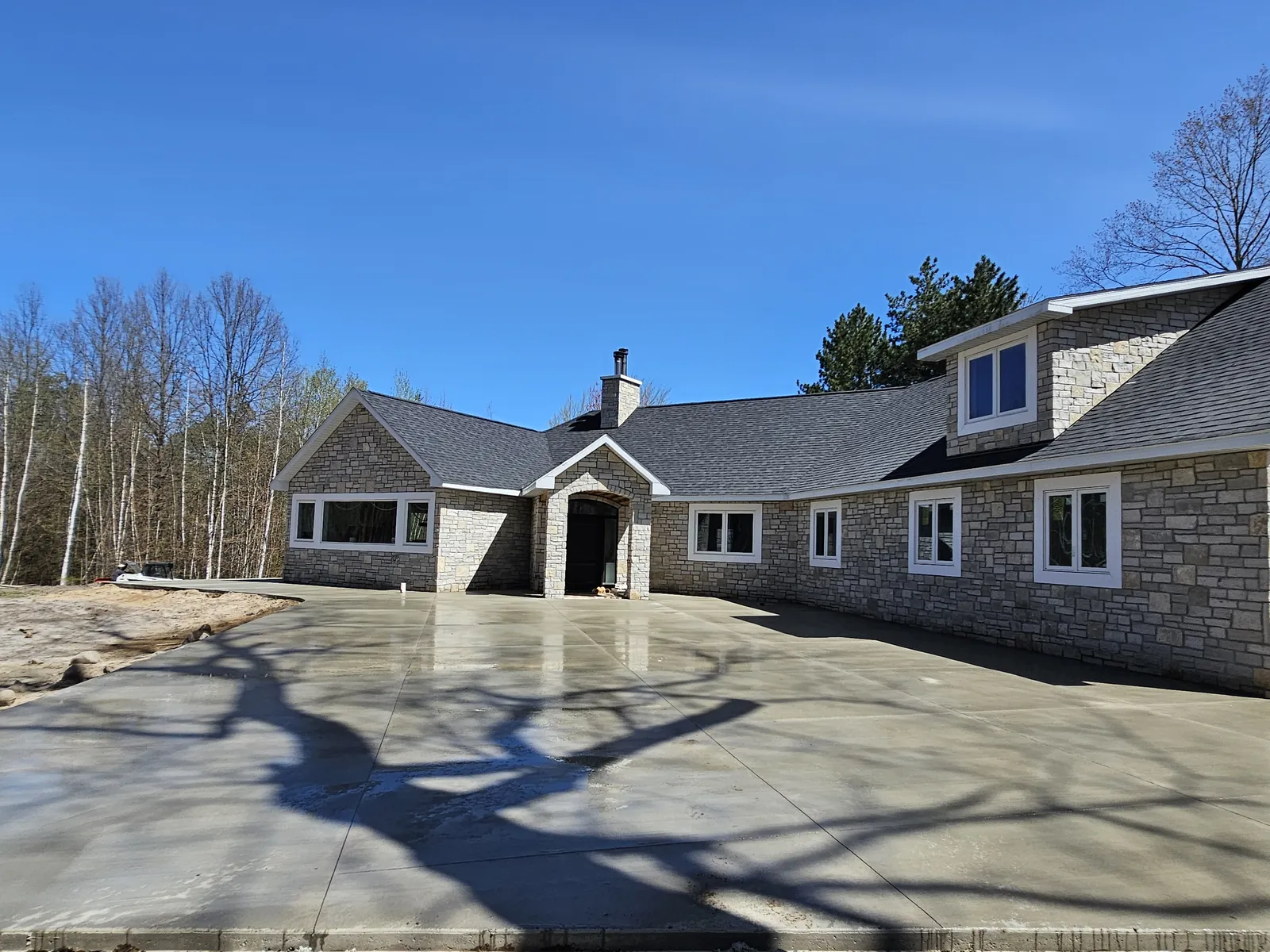
One of the most common questions we hear after a pour is simple: when can I use it? Concrete may feel hard within a day, but it keeps gaining strength for weeks. Knowing the difference between setting and curing — and respecting the timeline — is the key to a driveway or patio that lasts in Mid-Michigan.
Setting vs. curing: what is the difference?
These two terms get mixed up constantly, but they describe different things:
- Setting is the early chemical reaction (hydration) that turns fluid concrete into a solid. Initial set happens within a few hours; the surface is firm but still weak.
- Curing is the slower, ongoing process of gaining strength as hydration continues. Concrete reaches most of its strength in about 28 days and continues hardening for months.
In short: concrete sets fast but cures slowly. The waiting period protects all the strength you paid for.
The concrete curing timeline
Here is a realistic schedule for a standard residential pour in good conditions. Cold or wet Michigan weather can extend every stage.
| Time after pour | What is happening | What you can do |
|---|---|---|
| 4-8 hours | Initial set; surface firms up | Stay off it; finishing and joint cutting done |
| 24-48 hours | Surface hardened, ~25% strength | Light foot traffic is usually OK |
| 7 days | About 70% of full strength | Cars and light trucks can usually park |
| 14 days | Strength climbing toward design | Normal use for most flatwork |
| 28 days | Full design strength reached | Heavy loads, RVs, equipment OK |
Walk on it: 24 to 48 hours
You can usually walk carefully on new concrete after a day or two. Keep pets, bikes, and dragging objects off until the surface has hardened to avoid scuffs and prints.
Drive on it: about 7 days
Wait roughly seven days before parking passenger vehicles on a new driveway. At that point concrete has reached around 70 percent of its strength — enough for everyday cars and light trucks.
Full cure: about 28 days
Heavy vehicles, RVs, dumpsters, and equipment should wait the full 28 days. Loading concrete too early is one of the most common causes of premature cracking.
Curing best practices
How concrete is cured in the first week matters more than almost anything else. The goal is to keep moisture in so hydration can continue.
- Keep it moist. Water-cured concrete is stronger. Damp burlap, plastic sheeting, or periodic misting prevents the surface from drying too fast.
- Use a curing compound. Sprayed-on curing membranes lock in moisture and are common on driveways and flatwork.
- Protect from extremes. Shade fresh concrete from direct summer sun and wind; insulate it from early frost.
- Stay off it. Respect the traffic timeline above so you do not stress concrete before it is ready.
- Hold off on de-icing salts. Avoid salt for at least the first winter so the surface can fully harden.
How Michigan temperature affects curing
Temperature drives the chemical reaction, so Mid-Michigan weather has a big impact on the timeline:
- Cold weather (below 50 degrees F): Hydration slows dramatically; near freezing it nearly stops. Crews use blankets, heated enclosures, or accelerating admixtures to keep curing on track. Late-fall and winter pours in Bay City, Midland, and Saginaw often take longer to reach driving strength.
- Hot weather (above 85 degrees F): Concrete sets too fast and water evaporates quickly, raising the risk of surface shrinkage cracks. Crews pour early, use retarders, and water-cure aggressively.
- Ideal range (50-75 degrees F): Spring and early fall offer the most predictable, even curing across the Great Lakes Bay Region.
Because of these effects, we schedule pours around the forecast and adjust the mix and curing method to the season — a key reason local experience matters in Michigan.
Planning your project around the timeline
When scheduling work, build the cure time into your plans:
- Pouring a driveway before a trip? Allow a week before you need to park on it.
- Replacing a garage floor? Plan vehicle storage for at least a week.
- Tackling a patio for a summer party? Pour at least two weeks ahead for comfortable use.
Rushing the timeline rarely ends well — the patience you spend up front pays off in a slab that holds up to decades of Michigan freeze-thaw cycles.
Questions about your project timeline?
Every pour is a little different, and the right curing plan depends on the season, the slab, and how you will use it. Merchant American Concrete pours and cures driveways, patios, basement floors, and commercial flatwork across Bay, Midland, Saginaw, and Tuscola counties.
If you want guidance on timing your project — or a free estimate — call us at (989) 501-4525.