If you have ever ordered concrete and felt lost in a wall of numbers — 3500 PSI, 4-inch slump, 6 percent air — this guide is for you. Here is what ready-mix concrete actually is and how to spec the right mix for a project anywhere from Bay City to Midland to Saginaw.
A quick note on roles: Merchant American Concrete is a concrete contractor — we place and finish concrete on site. We are not a ready-mix supplier. What we do is help you spec the right mix, coordinate with a local ready-mix plant on your behalf, and pour, finish, and cure the concrete after it arrives.
What is ready-mix concrete?
Ready-mix concrete is concrete batched to your exact specifications at a ready-mix plant and delivered to your site in a rotating drum truck, ready to place. Instead of mixing bags by hand, you get a precise, consistent product designed for your application and our climate. It is the standard for driveways, patios, basement floors, foundations, and commercial flatwork because the mix is controlled, uniform, and arrives fresh.
The recipe is simple in concept — cement, water, sand, and stone (aggregate), plus chemical admixtures — but the proportions, the "mix design," are what make concrete strong and durable.
PSI: how strong is the concrete?
PSI (pounds per square inch) measures compressive strength — how much load the cured concrete can bear. Higher PSI means a denser, stronger, more durable slab. Most residential work falls between 3000 and 4500 PSI. Here is a quick reference:
| Application | Recommended PSI |
|---|---|
| Interior basement floors | 3000–3500 |
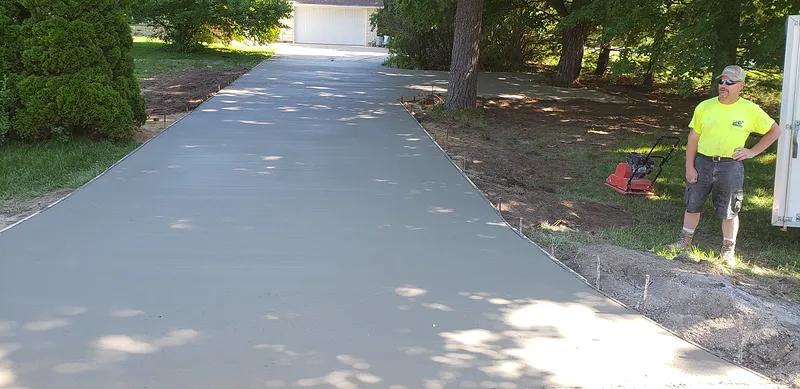
| Residential driveways | 4000–4500 |
| Patios & sidewalks | 3500–4000 |
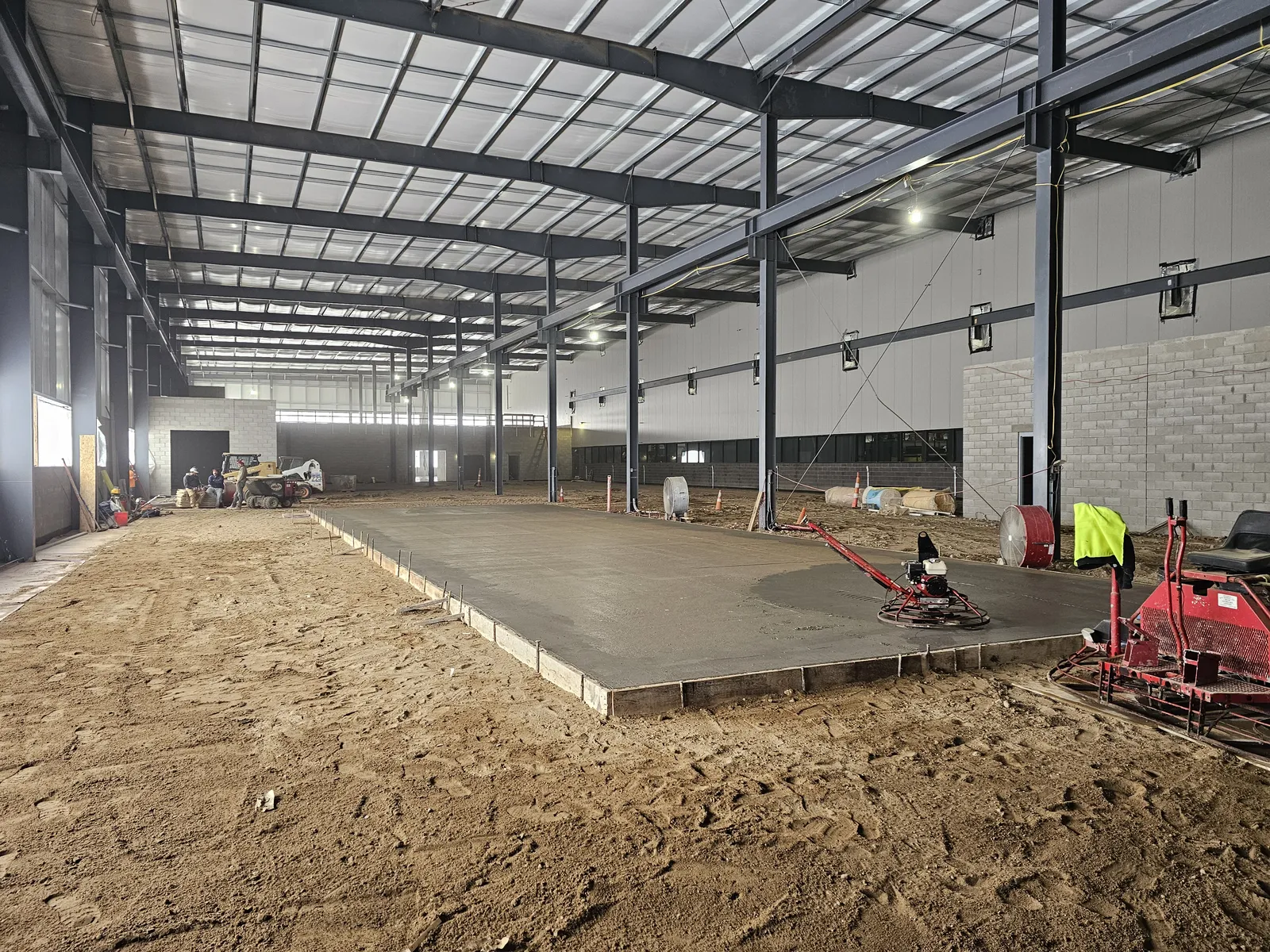
| Garage & shop floors | 4000–4500 |
| Foundations & footings | 3000–4000 |
| Commercial flatwork | 4000–4500 |
In Michigan, exterior flatwork like driveways and patios benefits from the higher end of the range — a stronger, denser mix resists the freeze-thaw damage and de-icing salts that punish concrete here every winter.
Slump: how workable is the mix?
Slump measures the wetness and flowability of fresh concrete, named for a test where wet concrete is dropped from a cone and the "slump" in inches is measured. A typical slab pour runs a 3 to 5 inch slump.
- Low slump (stiffer): stronger when cured, but harder to place and finish.
- High slump (wetter): easier to pour and spread, but adding water on site to loosen a mix weakens the final product.
The right move is to dial in workability at the plant with admixtures rather than adding water at the truck. A good crew orders the slump that suits the placement method and the weather that day.
Air entrainment: essential in Michigan
This is the single most important spec for exterior concrete in our climate. Air entrainment introduces millions of microscopic air bubbles into the mix. When water in the concrete freezes and expands, those tiny voids give it room to go, preventing the internal pressure that causes surface scaling and cracking.
Exterior flatwork in Michigan should carry roughly 5 to 7 percent entrained air. Skipping air entrainment on a Mid-Michigan driveway is one of the most common — and most expensive — mistakes you can make.
Aggregate, fiber, and rebar
Aggregate is the sand and stone that makes up the bulk of concrete. The size and gradation affect strength, finish, and how the mix flows. Standard flatwork uses a typical coarse aggregate; decorative finishes like exposed aggregate use specific stone chosen for appearance.
For reinforcement, you have a few options:
- Rebar: steel bars that add structural strength, standard for driveways, foundations, and slabs carrying heavy loads.
- Wire mesh: sheets that help hold a slab together and control cracking on lighter residential work.
- Fiber reinforcement: fibers blended right into the mix to reduce shrinkage cracking. Fiber complements but does not fully replace rebar or mesh where structural strength is needed.
For most driveways we recommend rebar or mesh plus a quality mix; fiber is a useful add-on, especially for thinner slabs and to limit early shrinkage cracks.
How ready-mix delivery works on a project
Here is the typical flow once your mix is specified — and where the contractor (us) and the ready-mix plant (the supplier) each fit in:
- Spec the mix. Project type, total volume (in cubic yards), PSI, slump, air content, and any admixtures. As your contractor, we help you nail down the right spec for the application and the weather.
- Order from a local ready-mix plant. The order goes to a ready-mix supplier — either the homeowner or the contractor coordinates this. The plant batches the mix and dispatches the truck.
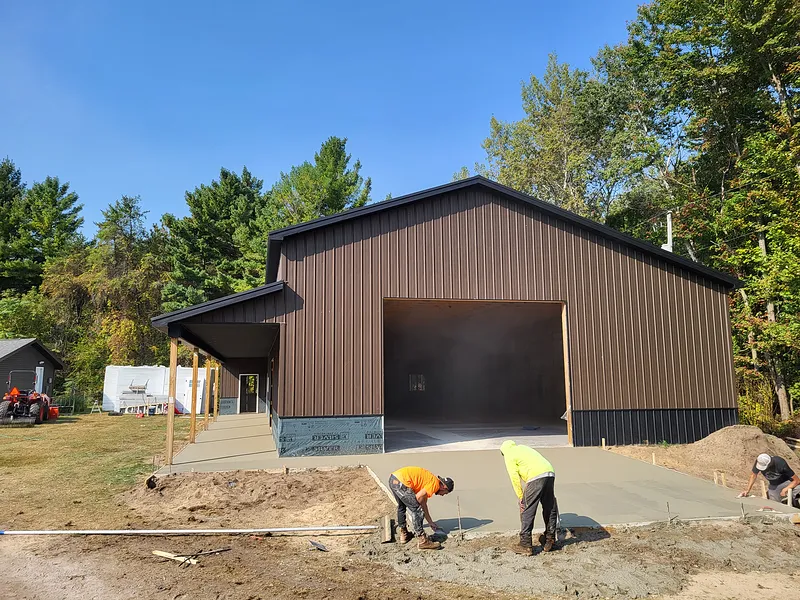
- Site readiness. Forms should be set, base compacted and graded, and reinforcement in place before the truck arrives. Concrete starts curing immediately, so the site has to be ready.
- Delivery and placement. The drum turns the whole way to keep the mix consistent. Our crew places, screeds, and floats the concrete. For hard-to-reach areas, concrete pumping (from a pump-truck operator) moves the mix over fences, into backyards, or up to elevated forms.
- Placement window. Plan to place and finish promptly. Hot, cold, or windy days shorten your working time, which is another reason short local haul distances matter.
Because concrete is perishable, ordering from a nearby plant keeps the mix fresh and gives the crew the most time to place and finish it properly across the Great Lakes Bay Region.
Get the right mix for your project
The best mix design depends on what you are building, the loads it will carry, and the Michigan weather it has to survive. Merchant American Concrete is a concrete contractor — we do not supply ready-mix. What we do is help you spec the right PSI, slump, and air content for your job, coordinate delivery from a local ready-mix plant, and pour, finish, and cure the concrete after it arrives. We work throughout Bay, Midland, Saginaw, and Tuscola counties and the wider Mid-Michigan region. Call (989) 501-4525 to talk through your project.