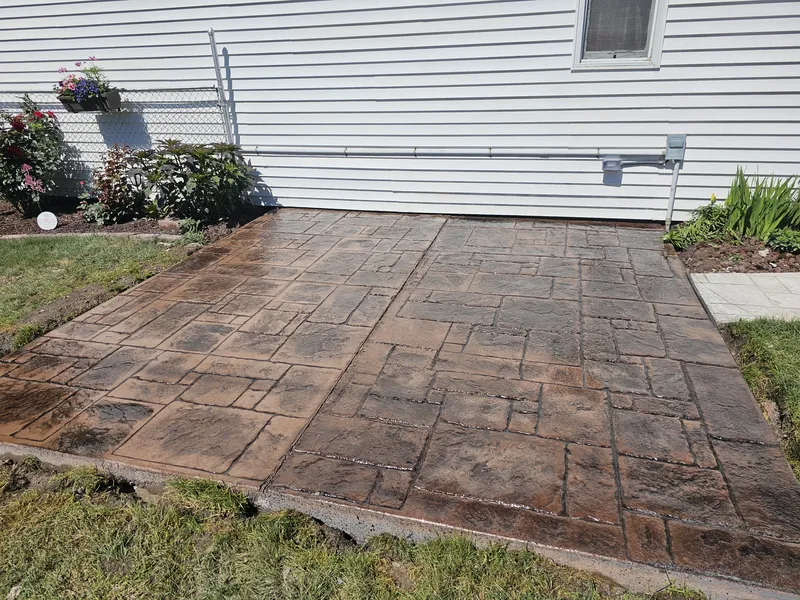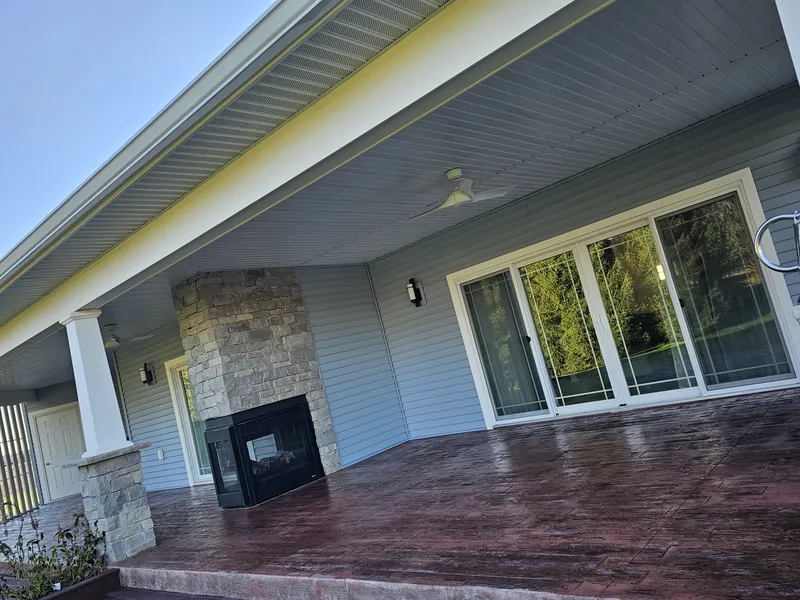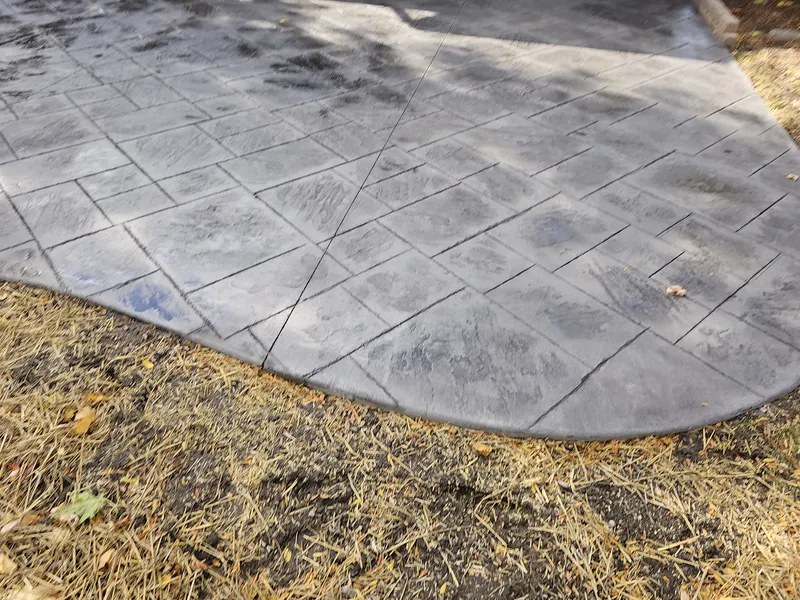
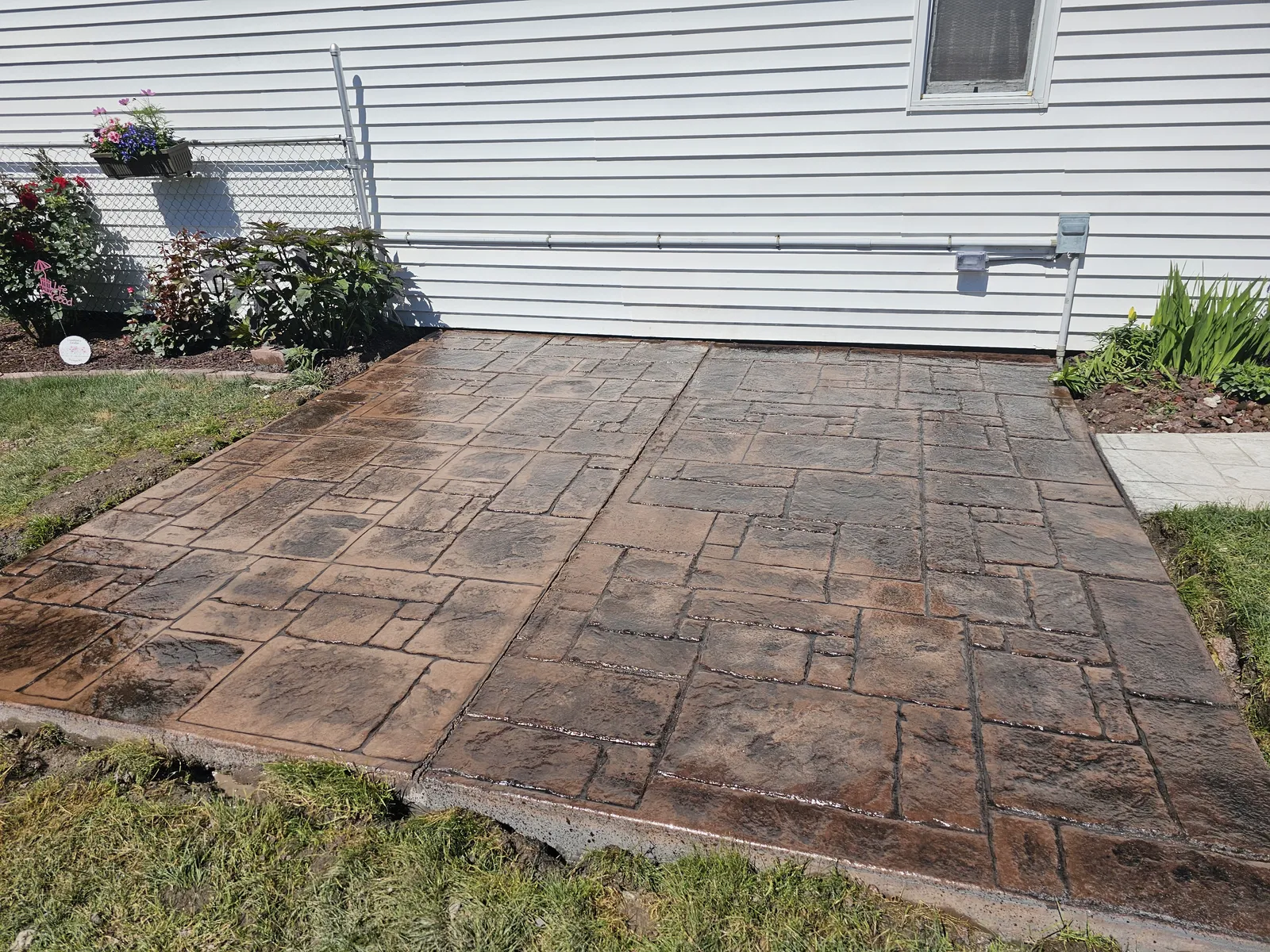
Exposed aggregate is one of the most popular decorative finishes we install across Bay City, Midland, and Saginaw — and for good reason. It looks upscale, grips well underfoot, and stands up to Michigan winters. This guide covers what it is, what it costs in 2026, and the honest pros and cons before you commit.
What is exposed aggregate concrete?
Exposed aggregate is a finish, not a different kind of concrete. We pour a normal slab, then remove the thin top layer of cement paste before it fully hardens. That reveals the stones, pebbles, and sand mixed into the concrete, leaving a textured, decorative surface. The aggregate can be natural river rock, crushed stone, or specialty decorative stone in different colors and sizes.
The result is a surface that looks more like landscaping stone than a plain gray slab, while still being a single, solid pour.
How much does exposed aggregate cost in Mid-Michigan?
Because exposed aggregate is an upgrade to a standard slab, you start with the base concrete price and add the decorative cost on top.
| Item | 2026 Mid-Michigan price |
|---|---|
| Standard concrete driveway (base) | $8–$15 per sq ft installed |
| Exposed aggregate upgrade | adds about $1–$4 per sq ft |
| Typical installed exposed aggregate | roughly $9–$19 per sq ft |
For comparison, integral color adds about $1–$3 per square foot and stamped concrete adds about $8–$15 per square foot, so exposed aggregate is one of the more affordable ways to step up from a plain broom finish.
Here is what that looks like for common project sizes at a mid-range exposed aggregate price:
| Project | Approx. size | Estimated installed cost |
|---|---|---|
| Front walkway | ~150 sq ft | $1,500–$2,850 |
| Patio | ~350 sq ft | $3,500–$6,650 |
| Two-car driveway | ~600 sq ft | $6,000–$11,400 |
Pros and cons of exposed aggregate
The advantages
- Excellent slip resistance. The textured stone surface grips far better than smooth concrete — a real benefit on Michigan driveways and pool decks that see rain, snow, and ice.
- Durability in freeze-thaw. When poured with air-entrained concrete and a proper base, exposed aggregate handles our freeze-thaw cycles well and hides minor surface wear better than a flat finish.
- High curb appeal. The natural stone look complements brick, stone, and modern homes throughout the Great Lakes Bay Region.
- Lower cost than stamping. You get a premium look for a fraction of the stamped-concrete upcharge.
- Hides dirt and tire marks. The busy texture disguises everyday grime better than smooth gray concrete.
The trade-offs
- Texture can feel rough. The same texture that resists slips can be uncomfortable for bare feet, kneeling, or rolling strollers and wheelchairs over.
- Harder to shovel. Snow shovels can catch on the raised aggregate. A plastic-edged shovel or snow blower helps.
- Needs periodic sealing. Sealing keeps the stones bonded and the color vivid (more below).
- Harder to clean spills. The crevices can trap debris, so it is less ideal for an outdoor kitchen or oil-prone work area.
Durability and freeze-thaw performance
Michigan driveways live or die by how they handle freeze-thaw. Water that seeps into concrete expands when it freezes, and repeated cycles cause surface scaling and cracking. Exposed aggregate performs well only when the fundamentals are right:
- Air-entrained concrete with microscopic air bubbles that give freezing water room to expand.
- A compacted gravel base for drainage and uniform support.
- Proper reinforcement with rebar or wire mesh.
- Control joints cut where cracks naturally want to form.
Skip any of these and even the prettiest aggregate will scale and pop. Done correctly, an exposed aggregate driveway can last 30 years or more.
Maintenance and sealing
The single most important maintenance task is sealing. A quality sealer:
- Locks the surface aggregate in place so stones do not loosen.
- Repels water, road salt, and de-icing chemicals that drive freeze-thaw damage.
- Deepens the color and gives a subtle sheen.
Plan to reseal every 2–3 years in our climate, and avoid harsh de-icers — sand offers traction without chemically attacking the surface. Routine care is simple: rinse with a hose and use a mild detergent for tougher spots.
Exposed aggregate vs. broom vs. stamped
| Finish | Look | Slip resistance | Added cost | Maintenance |
|---|---|---|---|---|
| Broom finish | Plain, practical | Good | Included | Low |
| Exposed aggregate | Natural stone texture | Excellent | +$1–$4/sq ft | Reseal every 2–3 yrs |
| Stamped concrete | Mimics pavers, brick, slate | Fair (can be slick) | +$8–$15/sq ft | Reseal every 2–3 yrs |
If you want a high-end look with great traction at a moderate price, exposed aggregate is often the sweet spot. If you want the absolute lowest cost and easiest snow removal, a broom finish wins. If you want the look of pavers or slate and do not mind the premium, stamped is the choice.
Get a real number for your project
Every site is different, and the best way to price exposed aggregate is to look at your driveway or patio in person. Merchant American Concrete pours decorative concrete throughout Bay, Midland, Saginaw, and Tuscola counties — including Bay City, Essexville, Midland, Freeland, Frankenmuth, and Caro. For a free, no-obligation estimate, call us at (989) 501-4525.