Choosing a patio surface in Mid-Michigan is not just about looks — it is about how the material holds up through years of freeze-thaw cycles, road salt, and snow shovels. The two most popular choices are stamped concrete and pavers, and both can look fantastic. This guide breaks down cost, durability, maintenance, and appearance so a homeowner in Bay City, Midland, or Saginaw can make a confident decision.
The quick comparison
| Factor | Stamped Concrete | Pavers |
|---|---|---|
| Installed cost | Base slab plus $8–$15/sq ft for stamping | Often similar to or higher than stamped |
| Surface | One continuous slab | Many individual interlocking units |
| Freeze-thaw behavior | Strong when sealed; can crack if base is poor | Flexes with frost; individual units can heave |
| Maintenance | Reseal every 2–3 years | Re-sand joints, pull weeds, reset shifted units |
| Repairs | Patches can be visible | Swap individual pavers easily |
| Design range | Huge variety of patterns and colors | Wide variety of shapes and colors |
Cost: what to expect in Mid-Michigan
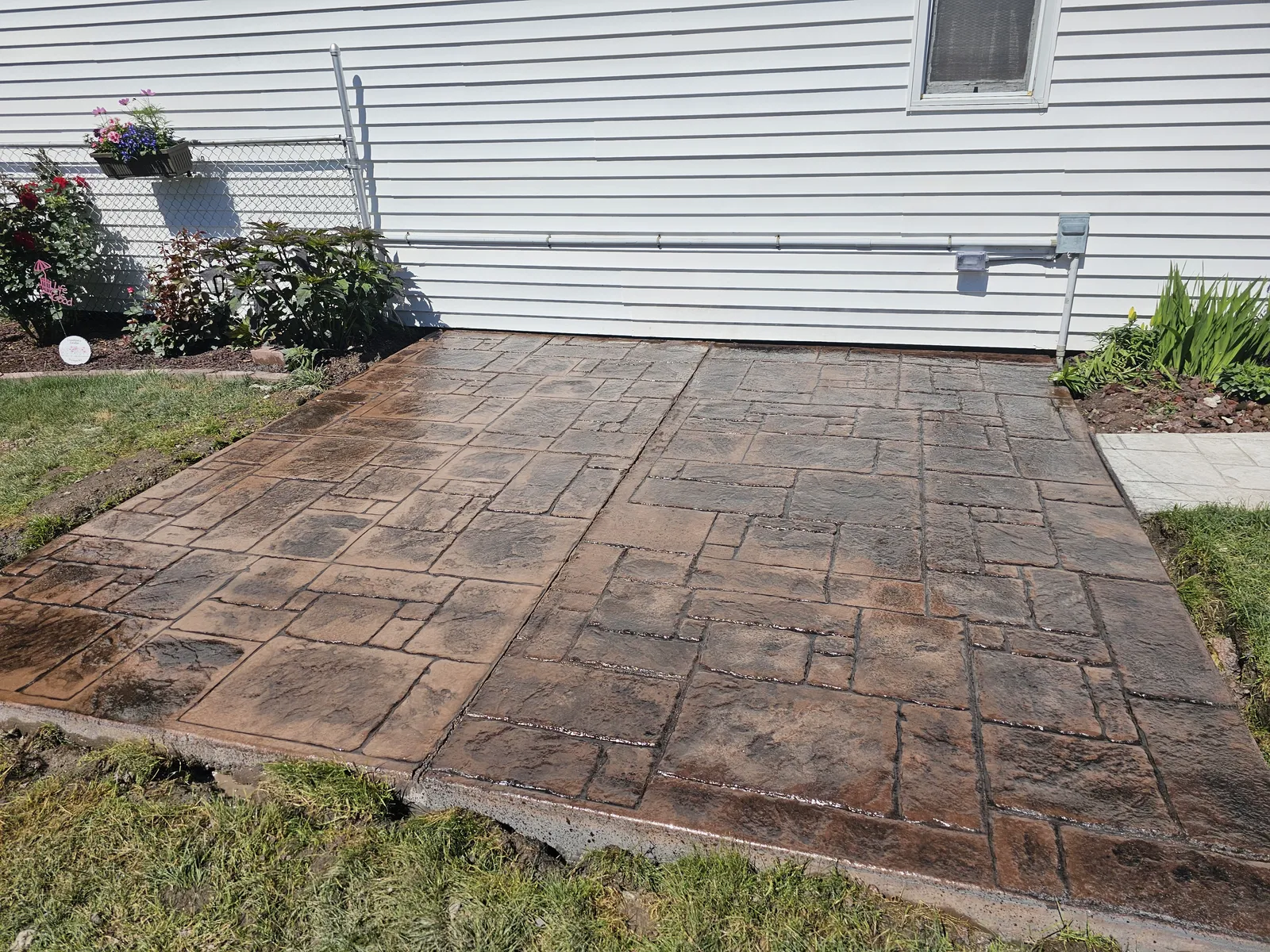
Stamped concrete starts with a standard concrete slab and then adds a stamped, textured finish. The stamping and coloring work typically adds $8 to $15 per square foot on top of the base slab. Integral color adds about $1 to $3 per square foot and is a popular, budget-friendly way to add richness.
Pavers are priced differently because the cost is driven by the units themselves plus a labor-intensive installation — excavation, a deep compacted base, sand setting bed, laying each unit, and edge restraints. In practice, a quality paver patio often lands in the same range as stamped concrete or higher, especially for premium paver styles.
The takeaway: do not assume one is automatically cheaper. Get written quotes for your exact square footage and compare what is included in the base preparation.
Durability in Michigan's freeze-thaw climate
This is where Mid-Michigan winters really matter. Water that seeps into a surface, freezes, and expands is the number one enemy of any patio here.
Stamped concrete
A stamped concrete patio is a single slab. When it is built correctly — a compacted gravel base, air-entrained concrete, proper reinforcement, and well-placed control joints — it resists freeze-thaw damage very well. The main risk is cracking, which is why base preparation and joint placement are so important. A quality sealer keeps water from soaking in and protects the color.
Pavers
Pavers sit on a flexible base, so the system can move slightly with frost without cracking the way a poorly built slab might. The trade-off is that individual units can heave, settle, or shift over time, leaving an uneven surface. Joints between pavers also invite weeds and ants, and the joint sand needs periodic refreshing.
Maintenance: the honest picture
- Stamped concrete: Low day-to-day maintenance. The big recurring task is resealing every 2 to 3 years to protect color and resist moisture. Sweeping and occasional rinsing keep it looking new.
- Pavers: More ongoing attention. Expect to re-sand the joints, pull weeds, and occasionally reset units that have shifted or settled. The upside: a stained or damaged paver can be lifted and replaced without touching the rest of the patio.
Looks and design
Both materials offer beautiful results, just in different ways.
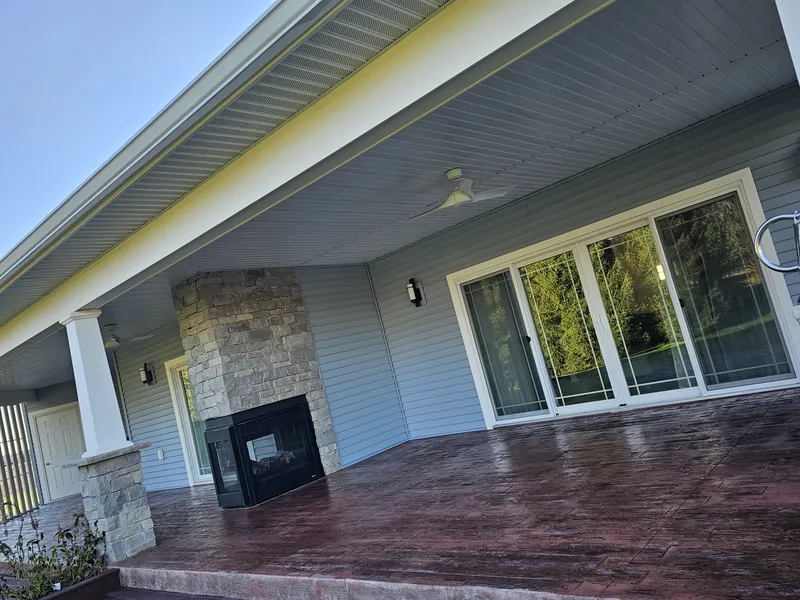
- Stamped concrete can mimic natural stone, brick, slate, or wood plank with a seamless, continuous look. Patterns and colors are highly customizable, and there are no joint lines breaking up the design.
- Pavers deliver a crisp, modular, hand-laid look with defined joint lines and the ability to mix shapes and tones. Many homeowners love the classic, old-world texture.
If you want a wide, uninterrupted surface that reads like natural stone, stamped concrete usually wins. If you love the look of individual units and want easy spot repairs, pavers are appealing.
Installation and timeline
Stamped concrete is poured, stamped, and finished relatively quickly, then needs curing time before heavy use. Pavers take longer to install because each unit is placed by hand over a carefully built base, but there is no curing wait once they are down.
For either option, the base is everything in Michigan. Skimping on excavation and compaction is the most common reason patios fail early here.
Which should you choose?
- Choose stamped concrete if you want a seamless, custom stone look, lower routine maintenance, and a continuous surface — and you value a properly built, reinforced, sealed slab.
- Choose pavers if you prefer the modular look, want the flexibility to replace individual units, and do not mind periodic joint maintenance.
Both are excellent when installed correctly for our climate. The difference between a patio that lasts decades and one that fails in a few winters comes down to base prep, the right concrete mix, and proper finishing — not just the material you pick.
Get a real estimate for your patio
Merchant American Concrete builds stamped and decorative concrete patios across Bay, Midland, Saginaw, and Tuscola counties — including Bay City, Essexville, Auburn, Freeland, Frankenmuth, and beyond. If you want help comparing options for your space, call us at (989) 501-4525 for a free, no-obligation estimate.