Decorative concrete lets you turn a plain gray slab into a patio, driveway, or floor with real character — often for less than pavers, brick, or natural stone. But "decorative concrete" is really a family of finishes, each with its own look, price, and upkeep. Here is how the main options compare so you can pick the right one for your Mid-Michigan project.
The main decorative finishes
Stamped concrete
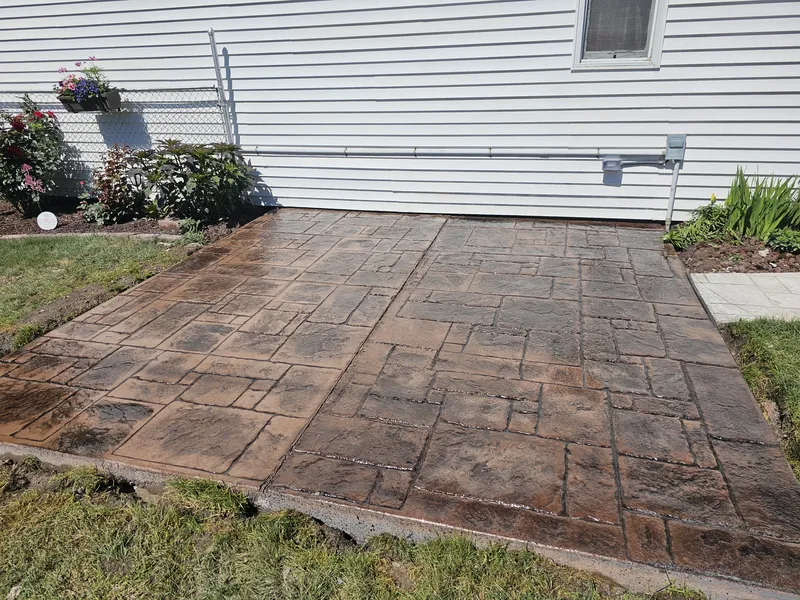
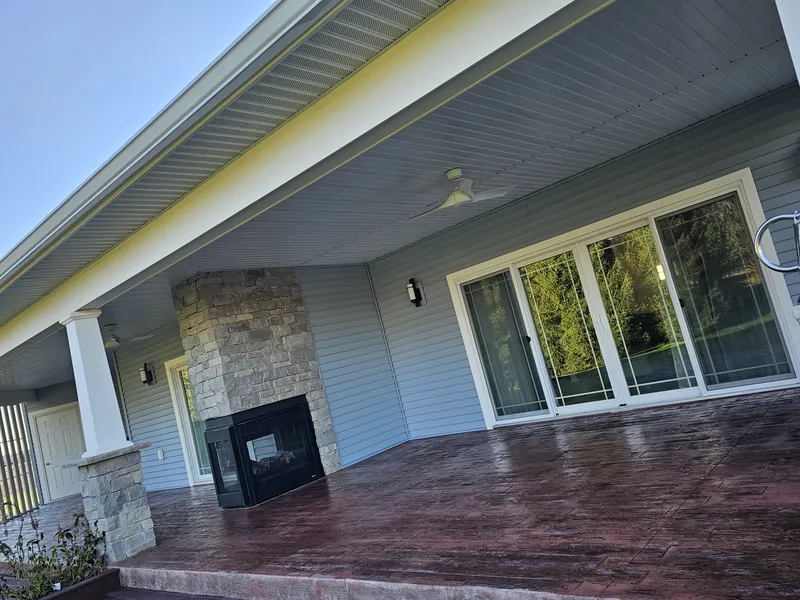
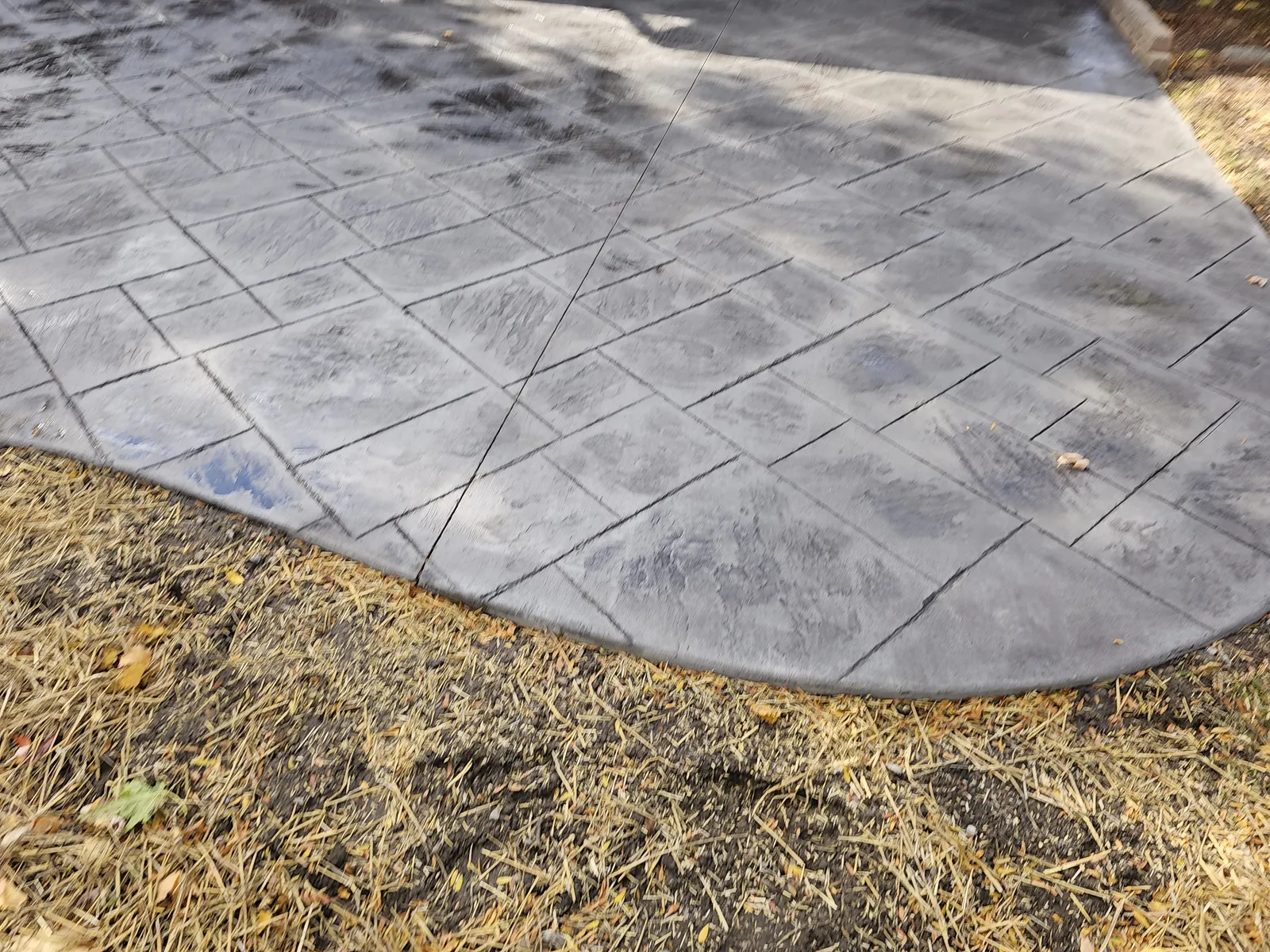
Stamped concrete is pressed with patterned mats while the surface is still wet to mimic brick, slate, flagstone, or wood plank. It is usually combined with color for a realistic effect. Best for patios, walkways, pool decks, and high-visibility driveways where you want the look of stone at a lower cost.
Stained concrete (acid and water-based)
Stains add color to cured concrete. Acid stains react chemically with the slab to create marbled, variegated, earth-toned effects that look natural and permanent. Water-based stains offer a wider, more predictable color palette, including brighter and lighter tones. Best for refreshing existing slabs, interior floors, and patios where you want depth and translucency rather than solid color.
Colored concrete (integral and broadcast)
Color can be added in two main ways. Integral color is mixed into the concrete before the pour, so the hue runs throughout the slab — chips and wear are far less noticeable. Broadcast (dry-shake) color is dusted onto the fresh surface and troweled in, giving a denser, more intense surface color. Best for driveways, patios, and any project where consistent, durable color matters.
Exposed aggregate
The top layer of cement paste is washed away to reveal the natural stone aggregate beneath, creating a textured, slip-resistant, pebbled surface. Best for driveways, walkways, and pool decks where traction and a rugged, low-glare look are priorities — a strong fit for Michigan's wet and icy seasons.
Polished concrete
Polished concrete is ground and refined with progressively finer abrasives to a smooth, often glossy finish, then sealed or densified. Best for interior floors — retail spaces, garages, basements, and modern living areas — where you want a durable, low-maintenance, easy-to-clean surface.
Side-by-side comparison
| Finish | Relative cost | Best location | Durability | Maintenance |
|---|---|---|---|---|
| Stamped | $$$ | Outdoor (patios, walks, drives) | High with sealing | Reseal every 2–3 years |
| Stained | $$ | Indoor & outdoor | High (color is in/on slab) | Reseal periodically outdoors |
| Integral color | $ | Indoor & outdoor | Very high (color throughout) | Minimal; reseal outdoors |
| Broadcast color | $$ | Outdoor flatwork | High surface color | Reseal to protect color |
| Exposed aggregate | $$ | Outdoor (traction areas) | Very high | Low; occasional reseal |
| Polished | $$$ | Indoor floors | Very high | Very low; dust mop, occasional buff |
Cost shown is relative ($ = most economical). As a rough guide for outdoor work in Mid-Michigan, integral color and exposed aggregate add modestly over a standard finish, while stamped concrete is the premium decorative option.
Indoor vs. outdoor: matching finish to climate
Michigan's freeze-thaw winters should drive your choice for any outdoor surface:
- Outdoors, prioritize slip resistance and sealing. Exposed aggregate and textured stamped patterns provide traction, and a quality sealer protects color and helps the surface shed water and resist de-icing salts.
- Polished concrete is an indoor finish. Its smooth, glossy surface is not suited to exterior freeze-thaw exposure or wet traction needs.
- Stains and integral color work both places, but outdoor applications need a protective sealer and periodic resealing to stay vibrant.
No matter the finish, the fundamentals still apply: a compacted base, air-entrained concrete, reinforcement, and properly placed control joints. Decorative finishes are only as good as the slab beneath them.
Maintenance at a glance
- Sealing is the most important upkeep for outdoor decorative concrete. Plan to reseal stamped and colored surfaces every couple of years, or as the finish dulls.
- Cleaning is simple — rinse or sweep, and wash with mild soap and water. Avoid harsh de-icers; sand offers traction without chemical attack on the surface.
- Polished floors need little more than dust mopping and the occasional buff to keep their shine.
Choosing the right finish
Match the finish to the job: stamped for a high-end patio or showpiece walkway, exposed aggregate for a grippy driveway, integral or broadcast color for durable everyday color, stains to revive or warm up a slab, and polished for a sleek interior floor. Your budget, the location, and how much maintenance you want all factor in.
Merchant American Concrete installs all of these finishes — stamped, stained, colored, exposed aggregate, and polished — across Bay, Midland, Saginaw, and Tuscola counties, built to handle our local climate. To talk through options and get an estimate, call us at (989) 501-4525.