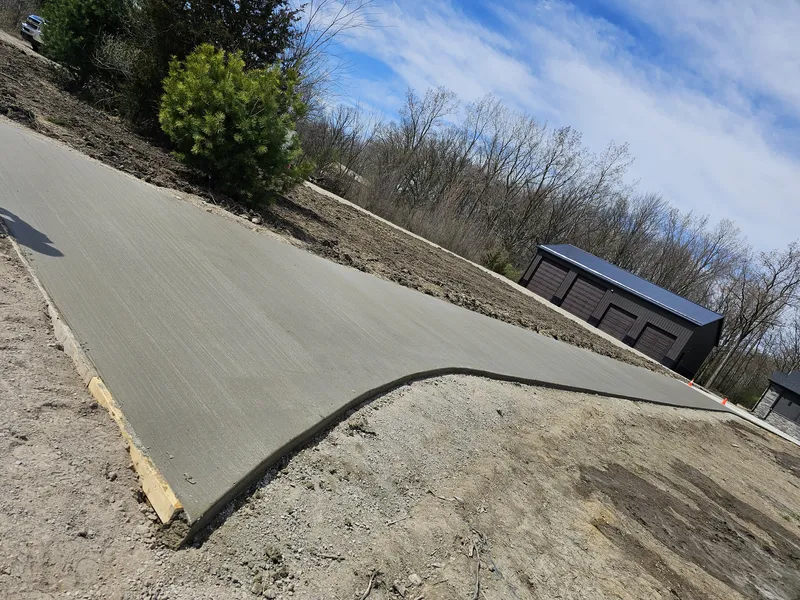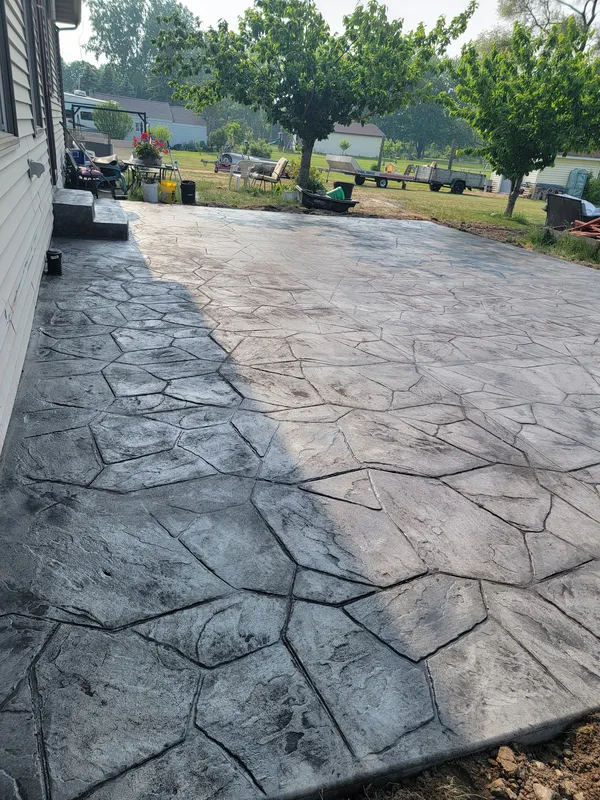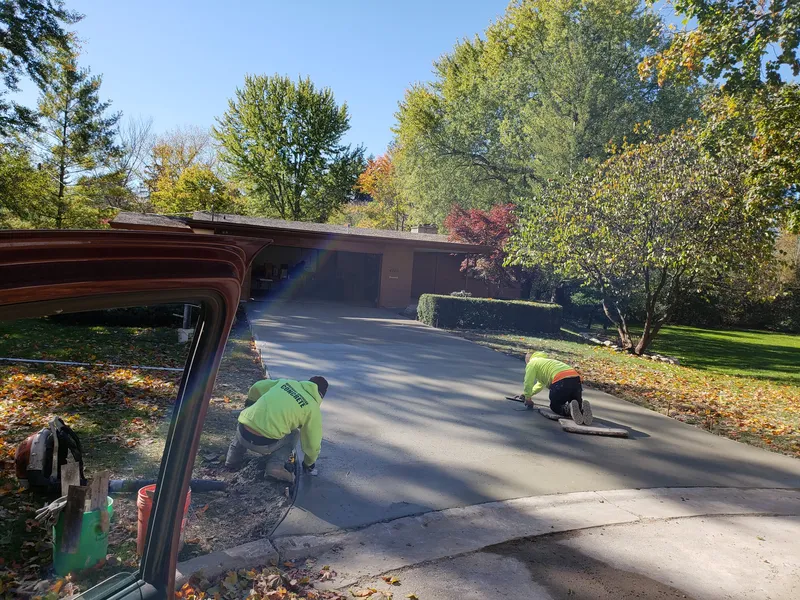

A freshly poured driveway, patio, or sidewalk is at its most vulnerable during its first Michigan winter. The concrete is still gaining strength, and aggressive salt or harsh freeze-thaw cycles can cause scaling, spalling, and surface damage that is hard to undo. The good news: with a few simple habits, you can get your new slab through that first cold season in great shape. Here is exactly how, for homeowners in Bay City, Midland, Saginaw, and across Mid-Michigan.
First, let it cure properly
Concrete does not finish gaining strength the day it is poured — it cures over time. Fresh concrete reaches most of its strength in the first 28 days, but it continues to harden for months. Before winter arrives:
- Keep new concrete moist during the initial curing period as directed by your contractor. Proper moisture curing builds a denser, stronger, more durable surface.
- Stay off it until it has cured enough to bear weight — typically a few days for foot traffic and about a week before driving on it (longer in cool weather).
- Give it time before sealing. Most sealers need the concrete to cure for about a month before application.
A well-cured slab is far better equipped to resist its first winter than one that was rushed.
The number-one rule: no deicing salt the first winter
This is the single most important thing to remember. Do not use deicing salts or chemical ice melts on concrete during its first winter. New concrete has not fully cured, and salts dramatically increase the number and severity of freeze-thaw cycles at the surface, which causes the top layer to flake and scale.
Safer alternatives for traction during that first season:
- Sand — adds grip without chemically attacking the surface.
- Non-clumping cat litter — a simple traction aid in a pinch.
Even after the first winter, go easy on deicers long-term, and avoid products containing ammonium nitrate or ammonium sulfate, which are especially aggressive toward concrete. Plain rock salt (sodium chloride) is the least harmful chemical option once the slab is mature and sealed, but used sparingly.
Seal it before the cold sets in
Sealing is your slab's raincoat. A quality concrete sealer keeps water and salt from soaking into the surface, which is exactly what causes freeze-thaw damage.
- Timing: Apply sealer after the concrete has cured (usually about 28 days), and ideally before the first winter — as long as temperatures are warm and dry enough for proper application.
- If you missed the window: If your slab was poured late in the fall and could not be sealed in time, be extra disciplined about avoiding salt, and plan to seal first thing in spring.
- Maintenance: Reapply sealer every few years to keep the protection fresh.
Snow removal: do's and don'ts
How you clear snow makes a real difference for a young slab.
Do
- Shovel promptly so snow does not melt, refreeze, and sit on the surface.
- Use a plastic shovel or a snow blower with the skid shoes set correctly to ride above the concrete.
- Choose sand for traction instead of salt during the first winter.
Don't
- Don't use a metal-edged shovel or scraper aggressively — it can gouge and chip a fresh surface.
- Don't pile salted snow from the road or other areas onto your new slab; that brings deicing chemicals right back onto it.
- Don't let water pool and refreeze. Keep drainage paths clear so meltwater runs off instead of soaking in.
Watch your drainage and downspouts
Standing water is the enemy. Make sure downspouts discharge away from the slab and that the ground slopes so water drains off the surface rather than pooling. Water that sits, freezes, and expands is what drives most freeze-thaw damage.
Quick first-winter checklist
| Task | When | Why |
|---|---|---|
| Moisture-cure the slab | First days after pour | Builds strength and durability |
| Wait before driving on it | About 1 week (longer if cool) | Prevents early cracking |
| Seal the concrete | ~28 days, before winter | Blocks water and salt intrusion |
| Use sand, not salt | All first winter | Avoids scaling and spalling |
| Shovel with plastic, promptly | Each snowfall | Prevents refreeze and gouging |
| Keep drainage clear | All winter | Stops pooling and freeze-thaw damage |
Why this matters in Michigan
Mid-Michigan winters subject concrete to dozens of freeze-thaw cycles. A slab built with air-entrained concrete, a solid compacted base, reinforcement, and proper control joints is engineered to handle that — but protecting the surface during its first, most vulnerable season locks in decades of performance. The habits above are simple, inexpensive, and make a lasting difference.
We are here to help
Whether you just had concrete poured or you are planning a project, Merchant American Concrete can advise on curing, sealing, and winter care across Bay, Midland, Saginaw, and Tuscola counties — from Bay City and Essexville to Midland, Saginaw, and Frankenmuth. For sealing services or questions about protecting your new slab, call us at (989) 501-4525.