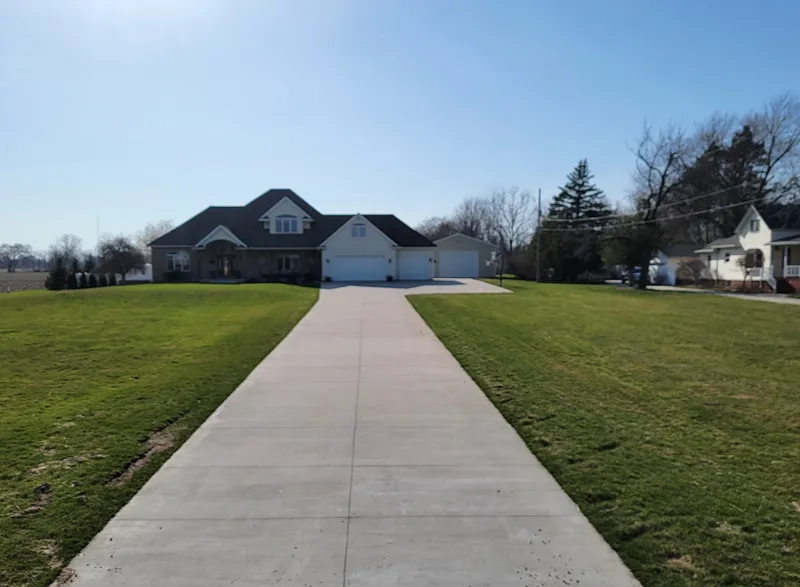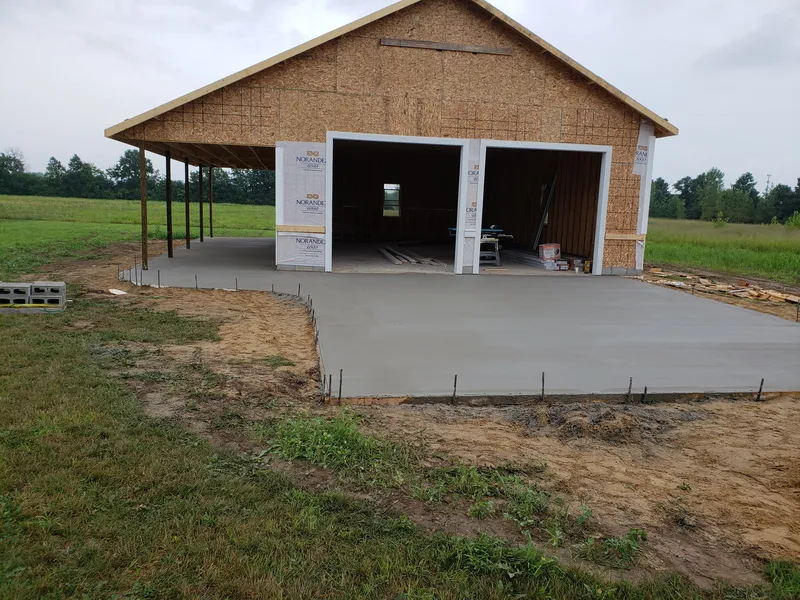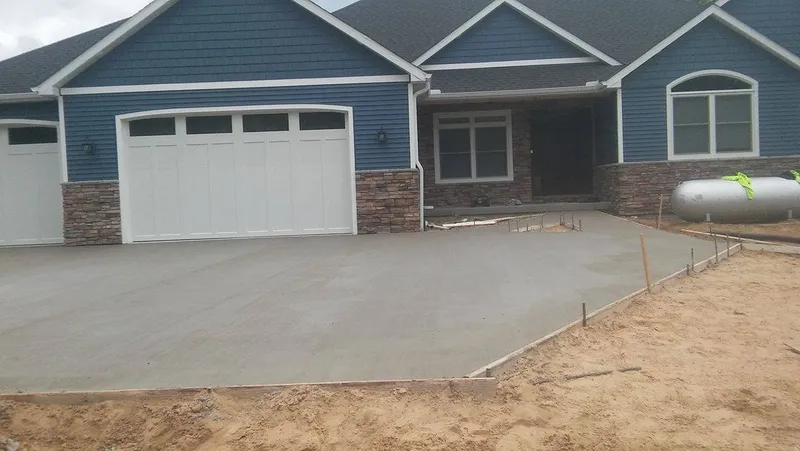
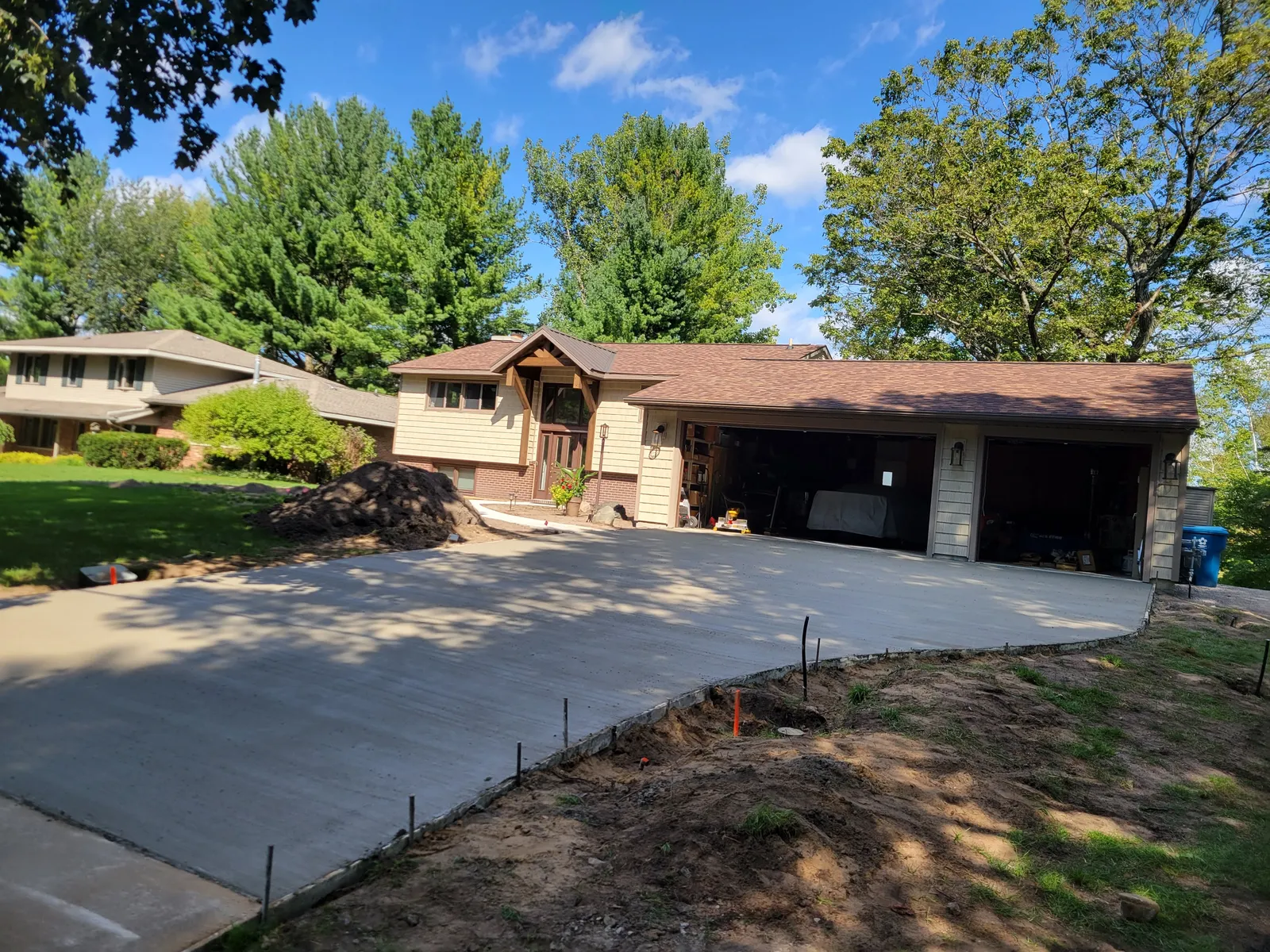
Picking between a concrete and an asphalt driveway is one of the bigger decisions a Mid-Michigan homeowner makes. Both work here, but they behave very differently when it comes to up-front cost, lifespan, and how they handle Michigan winters. This guide gives you a straight, head-to-head comparison so you can choose with confidence in Bay City, Saginaw, Midland, and across the region.
Head-to-head comparison
| Factor | Concrete | Asphalt |
|---|---|---|
| Installed cost (per sq ft) | $8–$15 | $5–$8 |
| Lifespan | 30–40 years | 20–25 years |
| Sealing | Optional, every few years | Required, every 1–3 years |
| Winter / salt resistance | Strong when air-entrained and sealed; salt-sensitive when new | Flexible in cold; softens in summer heat |
| Repairs | Patches can be visible | Cracks and patches blend in easily |
| Design options | Many (stamped, colored, exposed aggregate) | Limited (black only) |
| Resale appeal | Higher-end, long-lasting look | Clean but utilitarian |
Up-front cost
Asphalt almost always wins on the initial price tag. In 2026, expect roughly $5 to $8 per square foot installed for asphalt versus $8 to $15 per square foot for a standard concrete driveway. For a 600-square-foot two-car driveway, that is a meaningful difference at the start.
But the cheaper up-front number does not tell the whole story, because the two surfaces have very different lifespans and maintenance demands.
Lifespan: the long-term math
This is where concrete pulls ahead. A properly installed concrete driveway lasts 30 to 40 years, while asphalt typically lasts 20 to 25 years. Over a 40-year span, an asphalt driveway will usually need full replacement once — sometimes twice — plus regular resealing along the way.
When you spread the cost over the life of the surface, the gap narrows considerably and often favors concrete, especially when you factor in maintenance.
Winter and salt performance in Michigan
Mid-Michigan winters are the real test. Here is how each material handles them:
Asphalt
Asphalt stays flexible in cold weather, so it tends to resist cracking from frost movement. The trade-offs: it softens in summer heat, can develop ruts and depressions, and needs frequent resealing to keep water out. Snowplowing is generally forgiving on asphalt.
Concrete
Concrete is rigid and extremely durable, but it has one rule that matters in Michigan: avoid deicing salts on a brand-new slab through its first winter. Salt and aggressive freeze-thaw cycles can damage concrete that has not fully cured or is not sealed. The good news is that air-entrained concrete — which is standard on quality driveways here — is specifically designed with microscopic air pockets that let water expand without cracking the slab. Combined with proper base prep, reinforcement, control joints, and sealing, concrete handles our winters for decades.
Maintenance demands
- Asphalt: Plan to reseal every 1 to 3 years to prevent water intrusion and cracking. Crack filling is an ongoing chore, but repairs blend in well because the surface is uniformly black.
- Concrete: Much lower routine maintenance. Resealing is optional and only needed every few years. Repairs are less frequent, though patches can be slightly more visible on a concrete surface.
Curb appeal and resale value
Concrete offers far more design flexibility — you can choose a broom finish, integral color (adds about $1–$3/sq ft), exposed aggregate (adds about $1–$4/sq ft), or stamped concrete (adds about $8–$15/sq ft) to match your home. Asphalt is functional and clean but comes in one color: black.
For resale, a durable concrete driveway often reads as a higher-end, longer-lasting feature, which can help a home stand out to buyers in the Great Lakes Bay Region.
So which is right for you?
- Choose asphalt if your priority is the lowest up-front cost, you want a flexible surface for cold weather, and you do not mind resealing every couple of years.
- Choose concrete if you want the longest lifespan, the lowest long-term maintenance, design and color options, and strong resale appeal — and you are willing to protect it from salt during its first winter.
For most homeowners planning to stay in their home for the long haul, concrete's 30–40 year lifespan and low upkeep make it the better lifetime value. If budget is tight today, asphalt is a reasonable shorter-term choice.
Get a real number for your driveway
Merchant American Concrete pours driveways built for Michigan's freeze-thaw climate across Bay, Midland, Saginaw, and Tuscola counties — from Bay City and Essexville to Midland, Saginaw, Frankenmuth, and Caro. For honest pricing and advice on which surface fits your project, call (989) 501-4525 for a free, no-obligation estimate.