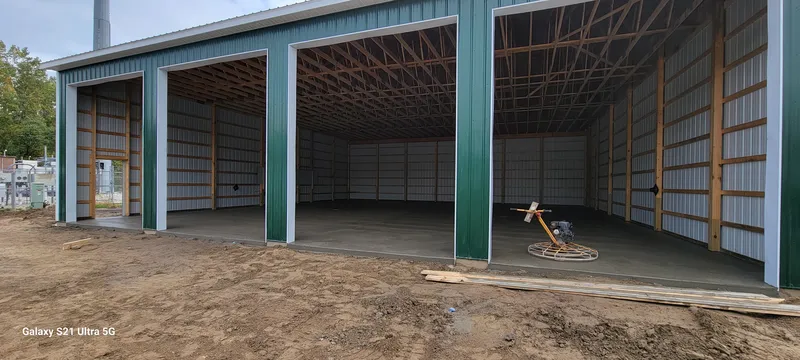
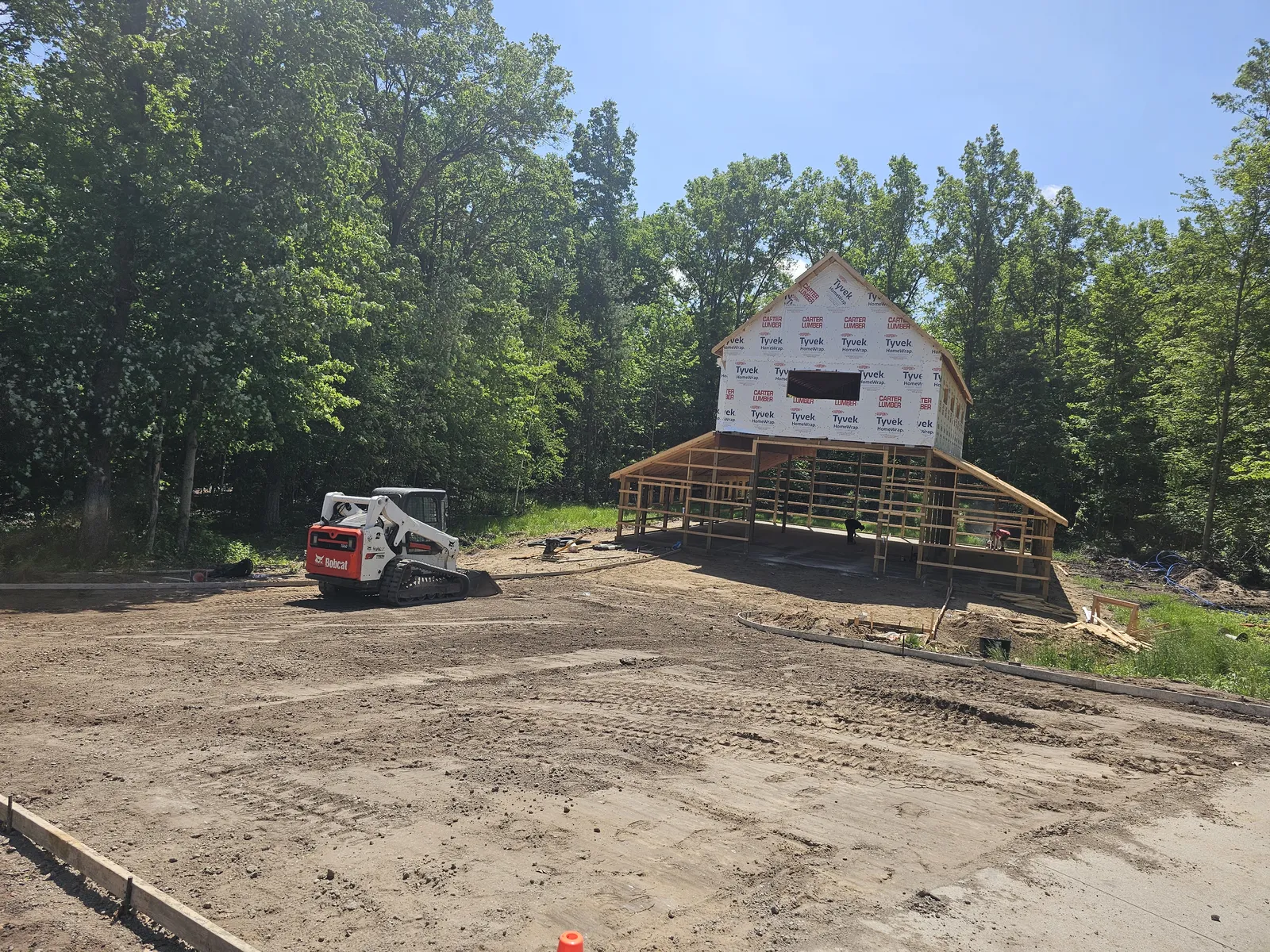
Timing matters more than most people realize when it comes to pouring concrete in Michigan. Temperature affects how concrete cures, how strong it ends up, and how well it survives its first freeze-thaw season. This guide explains the ideal window, why roughly 40F is the magic number, and how experienced crews pour safely even when the weather is not perfect — in Bay City, Saginaw, Midland, and across Mid-Michigan.
The short answer: late spring through early fall
For Mid-Michigan, the best window to pour concrete is generally mid-spring through early fall — roughly May through September/October, when daytime temperatures are reliably above 40F and overnight lows stay mild. This window gives concrete the steady, moderate temperatures it needs to cure properly without the stress of deep cold or extreme heat.
Why temperature matters so much
Concrete does not simply dry — it cures through a chemical reaction called hydration. That reaction is temperature-sensitive:
- Too cold and hydration slows or stalls. If fresh concrete freezes before it gains enough strength, the water inside expands and can permanently weaken the slab.
- Too hot and concrete cures too fast, which can cause shrinkage cracks, surface crazing, and a weaker finished product.
The widely used rule of thumb: keep concrete above about 40F for the first several days while it gains strength.
Ideal pouring conditions
| Condition | Ideal range | Why it matters |
|---|---|---|
| Air temperature | 50F–80F | Steady hydration, strong cure |
| Minimum (with care) | Above ~40F | Below this, hydration slows sharply |
| Overnight lows | Above freezing | Prevents fresh concrete from freezing |
| Humidity / wind | Moderate, low wind | Reduces rapid surface drying and cracking |
The best days are calm, mild, and not blazing hot — exactly what late spring and early fall deliver in the Great Lakes Bay Region.
Pouring in cold weather
Concrete can be poured in colder months, but it takes extra precautions. A good crew will:
- Adjust the mix — use warm mix water, accelerating admixtures, or a higher cement content to speed early strength gain.
- Protect the slab — cover fresh concrete with insulated blankets or use enclosures and heaters to hold in the heat of hydration.
- Prepare the ground — never pour on frozen ground, which can settle and crack the slab as it thaws.
- Extend the schedule — cold concrete cures slowly, so it stays protected longer before it can bear loads.
Done right, cold-weather pours can produce excellent results — but they require planning, and rushing them is risky.
Pouring in hot weather
Summer heat brings its own challenges. When temperatures climb, crews manage the pour by:
- Scheduling early — pouring in the morning to avoid peak afternoon heat.
- Keeping it moist — using evaporation retarders, fogging, or curing compounds to slow surface drying.
- Working efficiently — placing and finishing quickly before the surface stiffens.
- Curing diligently — keeping the slab damp so it does not lose moisture too fast and crack.
Spring thaw and wet conditions
Early spring in Michigan can be tricky: the ground may still be frozen or waterlogged from snowmelt. Pouring on soft, saturated, or frozen subgrade leads to settling and cracking. Sometimes the smart move is to wait a couple of weeks for the ground to firm up and drain, even if the calendar says spring has arrived.
Scheduling tips for Mid-Michigan homeowners
- Book early. The May–September window is the busy season for concrete contractors across Bay City, Saginaw, and Midland. Reserve your spot well ahead.
- Stay flexible on the exact day. Crews watch the forecast and may shift a pour by a day or two to dodge rain, frost, or a heat spike — that flexibility protects your slab.
- Plan curing time into your project. Concrete needs days to gain strength before heavy use, and longer in cooler weather.
- Account for its first winter. A slab poured in late fall has less time to cure and seal before the cold sets in. When possible, pour early enough to let it cure and be sealed before winter.
- Trust the crew's call on weather. If we recommend rescheduling, it is to give your concrete the best possible start.
Bottom line
You can pour concrete nearly year-round in Michigan with the right expertise, but the easiest, most reliable window is late spring through early fall, when temperatures sit comfortably above 40F. Outside that window, success comes down to proper mix design, ground prep, protection, and curing.
If you are planning a driveway, patio, basement floor, or any flatwork and want guidance on the best timing, call Merchant American Concrete at (989) 501-4525. We serve Bay, Midland, Saginaw, and Tuscola counties and will help you schedule your pour for the strongest possible result.